


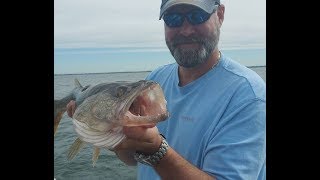
How to "Jig" the Detroit River for Walleye
- Apr 2, 2018
- 9 min read
Walleye Fishing Detroit River by: Captain “Big Mike”
Over the years I’ve spent many hours fishing the Detroit River for some incredible Walleye and it’s been a steep learning curve to say the least. First and foremost to be able to “jig” the river you’ll need to one of 2 things…have a bow mount trolling motor or a stern mount so you can back troll. The object to fishing this river with it’s high currents is to be able to keep your fishing line as vertical (hence Vertical Jigging) as possible. The method to do this which confuses a lot of people is to ignore the current and pay attention to the wind and it’s direction.
Here’s what you’ll want to do to fish this river properly. First make sure you have a jig head that’s heavy enough for you to be able to feel the bottom of the river. Most folks around here have settled in at ¾ oz jigs, however, many use as heavy as 1 oz and as light as 5/8th oz. There isn’t any right or wrong as long as you can feel the bottom. One thing that IS important is that everyone uses the same or heavier weight than the person controlling the boat. If for example the captain is at the bow controlling the boat using a 1 oz and the folks behind him/her are using 5/8th the people behind will most likely NOT be vertical due to the speed control of the person on the bow adjusting for their weight jig. Most fishermen in this area use what’s called a FinS 4” minnow or a Wyandotte worm of various colours. Soft plastic baits like this are the preferred baits.
Many anglers believe in “tipping” with a minnow, however, in all my years fishing this area I have never found tipping with a minnow to produce better than with none at all. What I can tell you is that your jig will feel heavier and the action will be very different the more you have on the hook. I don’t feel tipping is necessary at all, but again, to each their own! There’s no right or wrong here!
Many people in this area also use a “stinger hook” which is generally a #8 treble hook on a short lead hooked to either the jig eyelet or directly on the jig hook. This IS something I believe in because often the walleye will hit with a “short strike” meaning they grab only the end of the lure rather than inhaling the bait such as a bass would do. This will definitely help you catch more fish! I highly recommend using stinger hooks!!!
Next, for the person controlling the boat and the drift…they will want to point the nose/stern into the wind whichever direction it is coming from. What you’ll do is drop your line down and then “chase” the line to maintain vertical control of the jig. The speeds will vary and depend on wind gusts and you’ll need to adjust your speed as the wind changes. A great way to do this is with a bow mount trolling motor that holds it’s position (not spot locking) such as a Minn Kota Terrova, Powerdrive, Motor Guide xi5 etc. A bow mount that is cable driven such as a Minn Kota Maxxum will work, however, you’ll need to keep your foot on the pedal at all times so that the motor doesn’t spin and take you out of the zone keeping your line vertical.
When jigging the Detroit River, I strongly suggest a lift of about 6-8 inches off the bottom with a controlled fall back down. Walleye tend to hit your bait when the jig is falling rather than on the lift so you may not feel the strike at all. It is VERY important to keep your bait jigging at all times. As soon as you hit the bottom do not let it rest, rather, lift again immediately. One reason this is important is because there is a lot of debris cables junk at the bottom that will cause you to get snagged. A snag is not the end of the world and I’ll explain how to get it off shortly.
When you lift and you feel the weight of a fish on your line it is important NOT to try to set the hook hard like a bass fisherman does. What you should do is keep your rod pointed down to the water when your jig hits the bottom, and with this being said you will have to adjust your line length constantly as the bottom is not flat. There’s lots of holes and humps in the Detroit River so adjusting the line is something you’ll want to do throughout the entire drift. With your rod pointed downwards when the jig strikes the bottom of the river and a fish hits will enable you to set the hook by simply lifting straight up keeping tension on the line. I usually will lift my rod as high as my head, maintaining tension to set the hook, and then reel down to a comfortable position to fight the fish.
Oh nuts!!! You’ve managed to catch the bottom and are now snagged with braid!!! What do you do? Cut the line and start over? Well at 40-50 feet of line you could run out before you day is done! Here’s what to do if you do, and you will, get a snag in the Detroit River. Everyone but the snagged angler reel up. The person controlling the boat must kick it into overdrive going up river/stream to get ahead of the snagged line. Hold your rod tight and tighten your drag. Pop it while constantly reeling and you’ll find that once you get ahead of the area where the jig is snagged it’ll pop right out. Reset and resume fishing!
I personally feel that using braided line is the way to go when fishing in this area. You can tie a short leader of mono on a swivel if you’d like which will allow you to break off when snagged and reduce line twist. I use 14lbs braid and tie my jig directly to the line. I have found a much better sense of feel for often soft strikes from walleye who are lethargic due to the cold water as well as having no stretch in the line which allows me to maintain tension helping to lose less fish. There is no right or wrong so use what you feel works for you! I also recommend a shorter rod than you might think. At maximum I use a 6 6” rod medium heavy with a fast tip. You need some backbone in your rod to help with the hook set since we aren’t reefing hard when a fish strikes. Let the rod do the work for you while fighting the fish rather than trying to force it. A smooth reel is also key! I personally prefer to use the Pflueger President reels as I have found them to be the absolute best bang for your buck!
Walleye do not fight the same way as other fish who will try to swim away from you. Walleye for the most part while jigging will simply attempt to swim right back down to the bottom of the river often feeling like dead weight. It’s easy to tell when you have a fish other than a walleye on because fish such as silver bass, small mouth etc will give you a lot of head shake that Walleye just don’t do. It’s not to say Walleye don’t fight, they do, they just fight differently.
When fighting your walleye, which is coming up from anywhere from 15ft deep all the way to 40ft deep you want to keep constant tension on the line. There’s no need to pump the line reeling back down etc. There is also no need to reel crazy fast, in fact, if you do you’ll more than likely lose the fish. Slow and steady wins the race here folks! Keep your line tight, take your time, and don’t stop reeling in a controlled manner. Soon enough you’ll have your fish in the boat!
Late March to late April is know in the Detroit River as the “walleye run” when millions of fish come into the river to spawn. This is perhaps the world’s best fishery when it comes to volume of walleye in a concentrated area and is truly not to be missed. I have personally caught my 6 man limit with 5 fishermen in the boat (30 fish total) in less than 30 minutes!!!
In the past few years we have seen an enormous increase in smaller fish, mostly males, ranging from 1lbs to 4lbs. These are the best fish to keep and eat as they are young and have not built up toxins in their meat yet. There’s nothing wrong with keeping and eating a large 10lbs plus female, however, I strongly encourage you to release these fish especially if they are full of eggs! There’s no reason to keep a female who has yet to spawn as much of their meat is diminished due to being full of eggs, not to mention maintaining the species by allowing them to reproduce. There is no slot size on walleye in this area for Canadian anglers, however, I encourage you to be proactive and responsible. If you catch a trophy fish take a picture, get measurements if you want to have a reproduction made, and then release that fish to spawn. YES you CAN keep any Walleye you catch in this area, but that doesn’t mean you should.
Ok, so now we know how to fish for these Walleye but the question remains WHERE do we catch them? Well unlike many anglers I’m going to tell you exactly where to haul in your limit!!! The fishing is great from the mouth of Lake St. Claire all the way down to the mouth of Lake Erie and everywhere in between. That being said, if you are fishing down river you cannot go wrong starting in front of Fighting Island driving down towards Amherstburg on either side of the island. The bottom changes constantly as I’ve said not only in depth but in make up. You’ll find rocky areas then drift into mucky soft areas which make it a little tougher to feel the bottom. Stick with it and you’ll catch them. If you find you can’t feel the bottom for a bit or your line is not vertical anymore simply reel up and start again. Often times you’ll find you have a silver bass or other small fish swimming around with your jig in it’s mouth which is why you didn’t feel the bottom!
Many of us fish the Salt Mines and surround areas which is just ahead of Fighting Island. Fishing inside the docks in shallower water is often a great area to produce large fish. Fishing up near the mouth of Lake St. Claire is an area known as the “hole”. It’s a deep depression in the river where many large walleye have been caught. I have fished this river from east to west, end to end, and I can attest that during the spawn the walleye are everywhere throughout the river. If after a few drifts in one area you have not caught many pick up and move! These fish move around and school so when you do find a pack stick with it! You will notice many seasoned anglers doing short drifts in a particular area. They do this because they have found a pack of fish and are capitalizing on it. That being said, and I personally do this all the time, I do NOT follow the pack of boats fishing an area.
First and foremost I feel that when you have that many boats grouped together it puts too much pressure of the fish. It also adds the challenge of not banging into other boats fishing. Believe me when I tell you that often times the river is so packed with fishermen you could walk from boat to boat almost. Be a leader!!! Break away from the pack and don’t be afraid to try an area that’s isolated. Fishermen tend to be a funny bunch and will often assume that if there’s a pack of boats in one area then those guys MUST know something you don’t! That’s simply not the case at all. I took some friends out just the other day and we went far away from any other boat. We managed a 5 man limit in a few hours. Upon returning to the dock I spoke to several boats who had also returned. They told me where they were fishing and they only got a couple or none at all. Many were shocked to hear of our success, but to be honest, I wasn’t surprised at all for the reasons I’ve already stated.
On the topic of baits and colour…. I personally do not believe in colour making much difference especially in the early season. What I do suggest is using dark colours as the water is normally stained at this time of year and dark colours show up better than light bright ones. Jig head colour in my opinion does not matter in the least. Many will disagree with me I know and they are entitled to their beliefs. Walleye at this time of year will snap at almost anything like an angry dog as long as they lure is in their face. Try things out, don’t be afraid to change it up throughout the day, and stick with it! Find what works for you!
I hope this information and my opinions help you get on the Detroit River and stay on the fish! I promise if you manage to do the things I’ve laid out for you in this article you WILL catch fish and have fun!

Comments